
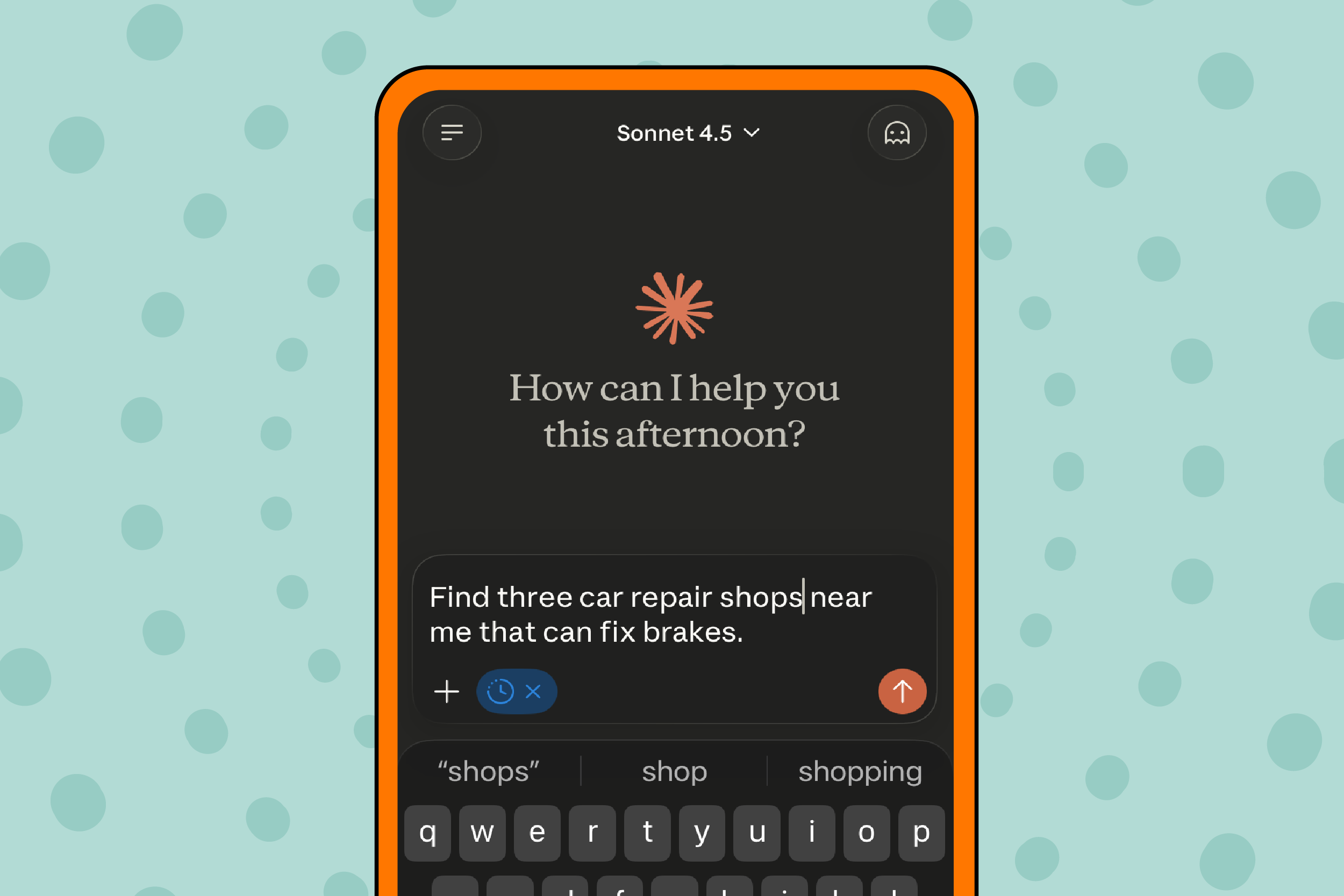
It is mind-boggling to consider how fast AI has become part of our lives. From the obvious to the unseen, Artificial Intelligence is imbued in so much of what we do that we can’t go a day, or even an hour, without being touched by it.
In light of this, the challenge for business owners is to draft a plan to leverage AI through AI Optimization (AIO), understand how it integrates with existing channels such as SEO, and decide where to allocate resources.
This challenge is compounded by the speed at which AI has progressed, the volume of press companies generate (which may be a distraction), and the new paradigm AI introduces in consumer interactions.
One key to developing an AI strategy is to recognize that the type of information required to complete a task/request can vary significantly from one request to another. As a result, the sources used to inform the AI’s response for each request will vary.
Consider two types of consumer requests.
- What pickup truck is better, the Ford F-150 or the Dodge Ram, for personal use and hauling gardening items like plants, dirt, and tools?
- Where can I buy a Ford F-150 near me?
The first request will be answered through a mix of manufacturer sites’ product pages, consumer reports, product reviews, social media, and forums (such as Reddit). It will combine product specifications, industry reviews, and user threads for each product to form quantitative and qualitative narratives as part of the response. The information will be primarily from the LLMs.
The second request will be satisfied through a few primary sources: Manufacturers’ dealer locators, Google Business Profiles, business reviews on sites like Google & Yelp, and the company’s website. The response will be primarily objective: location/distance, services/products sold, and a consistent history of strong customer ratings. This information will come from a combination of the LLM training and Discovery.
As companies develop their AIO strategy, they must first determine the customer journey and how to meet customers along that path.
LLMs/AI vs SEO
AI and Large Language Models (LLMs) offer a very different approach to analyzing and presenting information than the search engines we are accustomed to. While consumer adoption of AI generally involves applications and behaviors that mimic traditional search, AI’s technology and capabilities offer much more.
A high-level overview of SEO and AI/LLMs:
SEO – Search Engine Optimization
SEO follows rules. The exact nature of those rules is kept secret, but the components are well understood: content, HTML/code structure, technical metrics (page speed, etc.), and links must be optimized to deliver the best results. The algorithm is set (updated periodically). It takes in the content, indexes it, and ranks the results using the algorithm.
Search engine content is constantly updated. Their crawlers find and process content all day, every day. The results are trackable over time, and we can influence them through our own actions.
AI: LLMs + Discovery
Large Language Models (LLMs)
LLMs use predictive modeling to determine what the best response is when generating the next word. Each response is built word by word, with the prior word influencing the selection of the next in the context of the query or task. AIs call these tokens. But, in the practical sense, they are just words.
These LLMs are ‘trained’ on a huge set of data from many sources. This training creates the ‘understanding’ on which the AIs determine the ‘correct’ response or next word.
Depending on the AI, retraining can occur on various schedules; 24-36 months is common.
Nothing is “stored” in the traditional sense, unlike Search Engines that use stored and indexed information in databases. When an AI responds, it is ‘fresh’ each time. Some AIs, such as ChatGPT, also consider users’ reactions to refine future responses to other users.
AI Discovery
When an AI has access to the internet and “search” is enabled by the user, the AI can use discovery. The primary drivers for content during discovery are search engines. Depending on the licensing agreements, AI companies may have API access to content on other platforms and conduct real-time searches.
For non-search-engine sources, content from platforms such as Reddit and Wikipedia varies significantly in age and citation frequency.
Sources for AI and their LLMs
LLMs use many sources for training and discovery. While there is a lot of “news” around AI deals and acquisitions that bring a few companies to the public’s attention, no one source dominates. Consider the three most frequently cited sources*: Reddit, YouTube, and Wikipedia, each with less than 4% of the source citations at 3.11%, 2.13%, and 1.35%, respectively.
In 2025, through September, Reddit appeared in about 7% of ChatGPT results. Then, in September 2025, it fell below 1%. It has since risen to around 3%. The average age of the content shown is over 1 year for ChatGPT, while other models, like Perplexity, will surface content from the last decade.
In addition to these “top” sources, LLMs pull and train on publicly available content from Facebook, X, LinkedIn, news sites, review sites, and many other sources. Often, the training data source is not cited in the responses, though the information is used to help shape the response.
Type of Requests & Impact on AIO
While much attention is paid to deals for access to training data (e.g., OpenAI API access to Reddit), the importance of a given source depends on its relevance to the task or question at hand. As shown in the introduction, the sources for comparing trucks differ from those used to determine where to buy one. All LLMs use many sources, but companies optimizing AI appearance can only focus on a certain number.
When developing an AIO strategy and facing resource constraints, one approach is to prioritize the types of requests customers are likely to make. This is part of understanding the customer journey and deciding where along that path you will interact with them. Keep in mind that some of these sources are ones already being managed through your SEO or PR programs.
Path to AI Visibility – Developing an AIO Strategy
The responses from AIs depend on the information they can find about your company and your competitors, and the information you contribute that LLMs can use in AI training.
All of AIO comes down to quality information generation and distribution.
Prioritize the information consumers are looking for from the bottom of the funnel to the top:
About the Company
- Name, Address, Phone (NAP)
- Service area
- Products & Services
- Distinguishing traits of the company/services/products
About the Customer
- What does the decision-making process look like
- What are the customers’ priorities related to the products/services
- How do the customers form their questions
- Where are the customers going to ask these questions
- How can you best answer the questions in a non-promotional way
This is not a new approach to marketing. It is a new channel.
Mapping the Content – Editorial Calendar and Engagement
Most companies are in good shape with their own information. NAP information is available on the Google Business Profile, the BBB, the local chamber of commerce, and the company’s website. The products and services are well described on their site and are likely listed in Google Business Profile. If that is not the case, then it is the first step.
If your location isn’t visible and your product offerings aren’t clear, AIs can not recommend you.
Helping Customers
The challenges begin when companies struggle to understand what makes them distinctive and how customers are actually talking about what they want. When AI recommends businesses, part of the consideration is what is unique about the company that meets the users’ articulated needs.
Use platforms such as Reddit, LinkedIn, and Facebook to see how people are talking about and engaging with one another and with companies in your industry. Note the questions and how they are responding to each other.
Reviews
Asking for reviews presents another opportunity. Many companies provide great service, but they don’t ask satisfied customers for a review.
For local businesses, reviews remain a cornerstone of user search and, now, of AI. An active review-request program across multiple review sites will significantly increase the likelihood of appearing in AI recommendations.
Create the plan for generating and managing the information.
From basic location and service information to deep dives into your subject-area expertise, generating and distributing content remains a cornerstone of online marketing.
For bottom-of-the-funnel activities, continue with strong SEO strategies. In the discovery phase, AI uses real-time search engines to find companies. The AIs then combine search engine results, reviews, and website content with what they have learned during training to make recommendations to users. Clear, well-structured content remains vital for AI optimization.
For higher-funnel or more involved purchases, being a subject-matter expert will go a long way toward achieving citations and links in AI responses. Participating in forums such as Reddit, LinkedIn, and other platforms (industry-specific), and providing well-structured, practical, non-promotional advice and knowledge on your website (think Q&A) will help AIs surface your company in the appropriate context.
Going Forward
Like all marketing, there is no silver bullet. Providing good, well-structured information about your company, location, and services, combined with truly objective advice and expertise across multiple channels, is the best bet to being present in AI results.