

Traffic to your website does not automatically equal leads or booked jobs.
You can be ranking well, running ads, and watching your sessions climb, and still have gaps on the crew calendar. If that sounds familiar, the problem usually isn’t how much traffic you’re getting. It’s who that traffic is, and what happens once it lands on your site.
The good news? These problems are fixable. Below are seven most common reasons your moving company website is getting traffic but not booking jobs, starting with the most important one.
Key Takeaways
- Start with the right audience. If your traffic was never going to book, no amount of design polish will change that.
- Moving is a high-trust purchase. People are handing their entire lives to strangers, so your site has to earn confidence fast.
- Friction kills leads. Slow mobile pages, long quote forms, and buried phone numbers send visitors straight to your competitor.
- Specific beats generic. Dedicated service and location pages convert better than one catch-all “Services” page.
- The website is only half the job. Slow follow-up can waste every lead your site does generate.
1. You’re Attracting the Wrong Traffic
You can’t convert traffic that was never going to book in the first place.
The first question to ask is “am I attracting the RIGHT traffic”? That’s right, not all traffic is equal and it’s important to determine if your traffic even has the potential to convert. This is an audit that should be done for both paid and organic traffic.
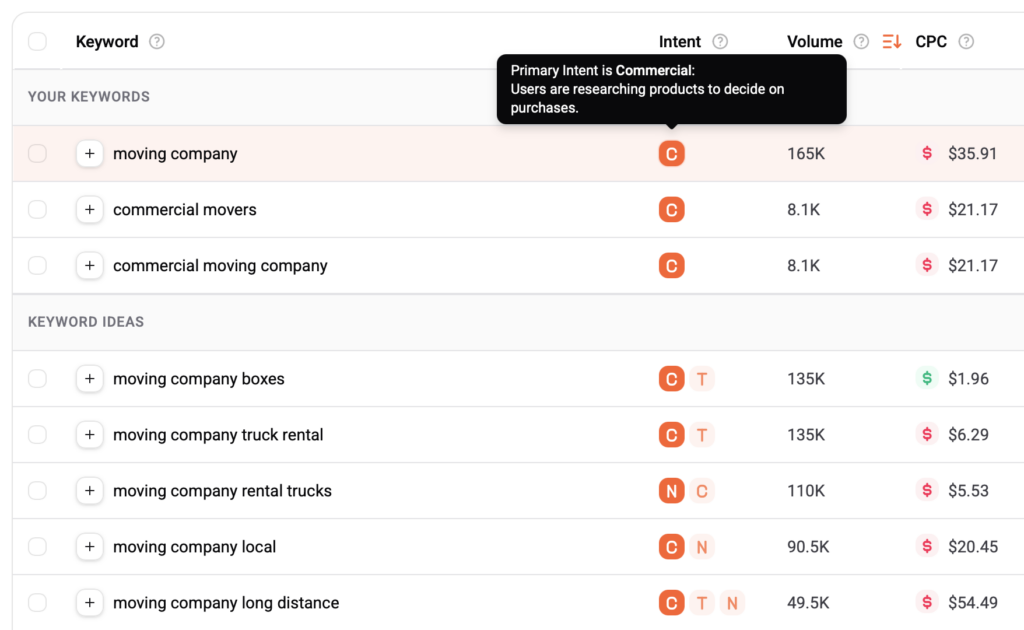
On the organic side, a lot of traffic moving companies get is informational and coming from blogs. Those readers are often looking for answers, not a mover. That content still has value, but it shouldn’t be judged like service page traffic. Then there’s traffic that isn’t on target at all: the wrong city, the wrong service, or job seekers looking for mover positions. On the paid side, it gets expensive fast. Broad match keywords and a thin negative keyword list will happily spend $15 to $40+ per click on searches that were never going to book.
Arguably, this is the most important one. So much so that as I started writing this blog, I realized it needed its own post to cover everything. For a deeper look at the organic and paid sides, and how to fix each one, read Are You Attracting the RIGHT Traffic? Why Search Intent Makes or Breaks Moving Company Leads.
The quick fix: Review the queries in Google Search Console and the search terms report in Google Ads, and ask of each one: would someone searching this hire us? It also helps to research search intent before you build or update a page. Tools like Ubersuggest or Semrush show what people are searching around a topic and whether those searches are informational, navigational, transactional or commercial. Then build your SEO and PPC strategy around the searches that lean commercial or transactional.
2. Your Site Is Slow or Clunky on Mobile
Picture your typical customer. They’re comparing movers on their phone, weeks or months before moving day, from the couch or on a lunch break. If your site is slow, hard to read, or the buttons are too small to tap, they’ll get frustrated and move on to the next result.
The fix: Run your site through Google’s free PageSpeed Insights and check the mobile score, then try requesting a quote on your own phone. If the platform itself is the problem, that’s a job for our website development team.
3. Your Quote Form Is a Chore (or Hard to Find)
For a moving company, the estimate request is the conversion. So why do so many mover sites make it so hard?
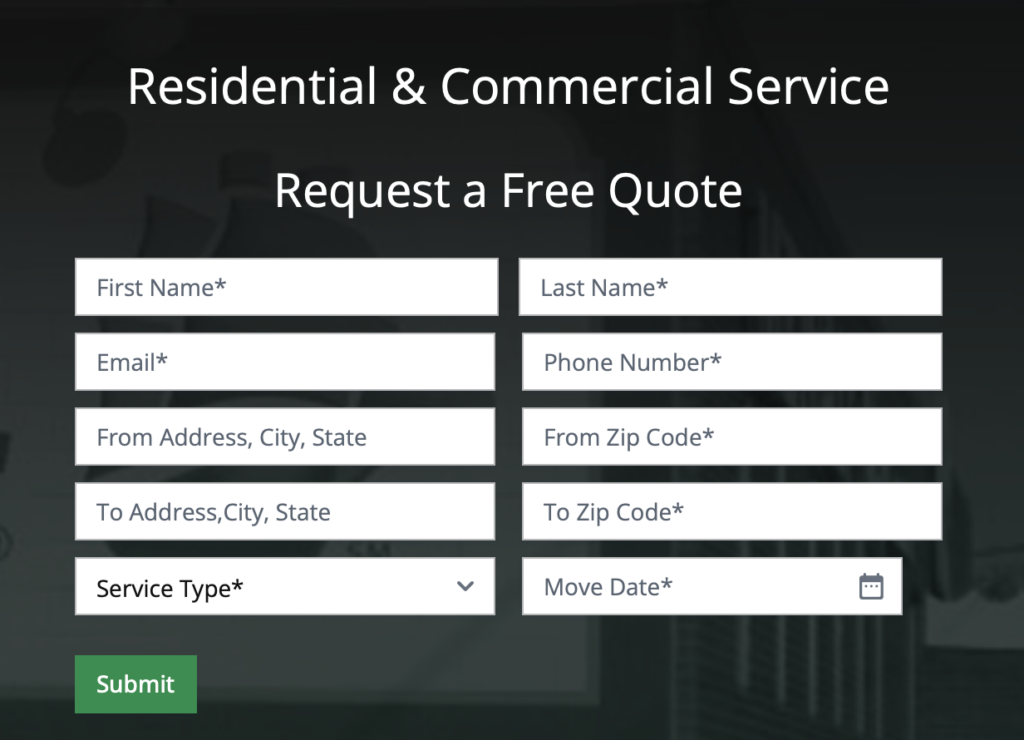
We regularly see quote forms with 20+ required fields: full inventory, square footage, number of stairs at both locations, elevator access, and more. Every extra field is one more reason for someone to leave before they hit submit.
Another problem that is just as common: the form exists, but it’s buried on a “Contact Us” page three clicks deep. And some sites only offer “Call for a free estimate,” which shuts out everyone who’s planning their move at 10 p.m. and doesn’t want to talk to anybody yet.
The fix: Put a short quote form above the fold on your homepage and key service pages. Ask for the essentials only and collect the details during the follow-up call or virtual survey.
4. You’re Not Giving Visitors a Reason to Trust You
Moving has a trust problem. Everyone has heard a horror story about a “mover” who held someone’s furniture hostage or showed up three hours late with half a crew. Your visitors walk in skeptical. Your website’s job is to reassure them that you are a trusted company.
The trust signals that matter most for movers:
- USDOT and MC numbers displayed where people can see them, not hidden in tiny footer text.
- Recent reviews pulled onto your homepage and service pages. According to BrightLocal’s Local Consumer Review Survey, the vast majority of consumers read reviews for local businesses, and they increasingly care about how recent those reviews are.
- Real photos of your trucks, crews, and warehouse. Stock photos of smiling models carrying an empty box fool nobody.
- A real physical address, licensing, insurance details, and any affiliations like the BBB or a van line.
The fix: Get these elements onto the homepage and continue to add trust signals across pages. Keep your Google Business Profile active with a steady stream of new reviews, and respond to every one of them. Then take a step back and try viewing your website as a skeptic. If you didn’t know anything about your company, would you trust it?
5. There’s No Clear Next Step
You know what you want visitors to do. Do they?
A surprising number of mover sites have no obvious call to action. The phone number lives in the footer. It isn’t click-to-call on mobile. The homepage has six competing buttons (“Learn More,” “Our Story,” “Services,” “Careers,” “Blog,” “Get a Quote”) and none of them stand out. When everything is a priority, nothing is. You need to pick your call to action and hammer it home!
The fix: Pick one primary action, usually “Get a Free Quote,” and make it impossible to miss. Give it a contrasting color and put it in the header, at the top of the page, and again after key sections. Make the phone number tappable on every page, and consider a sticky call button on mobile.
6. Your Service and Location Pages Are Too Generic
“We’re a full-service moving company proudly serving the greater metro area since 1998.” Sound familiar? It should, because it’s on about half the mover websites out there. It tells a visitor nothing and gives them zero reason to pick you over the next result.
People search for specific moves: a long-distance move from Chicago to Phoenix, a piano move, an office relocation, senior moving, or storage between closings. If all of that is lumped onto one “Services” page with a bulleted list, you’re not giving those searchers (or Google) a page that matches what they want.
Location pages have the same problem. Copy-and-paste pages where only the city name changes don’t rank well and don’t convert. And if you run multiple locations, pages targeting the same terms can end up competing with each other.
The fix: Build a dedicated page for each core service and each market you actually serve. Answer the real questions: what’s included, how pricing works, what happens if something gets damaged, and whether you’re licensed for interstate moves. Add local details, crew photos, and reviews from customers in that area. Our guide to service area pages covers how to do this the right way.
7. Leads Are Slipping Through the Cracks
Sometimes the website is doing its job and the problem shows up after the form is submitted. Moving customers rarely request just one quote. They are shopping around. They fill out three or four forms in one sitting, and the company that calls back first usually has the inside track. If your team gets back to web leads the next afternoon, someone else already has the job.
The fix: Set up instant notifications for every web lead and an automatic confirmation to the customer. Make sure this confirmation is more than just “your request has been submitted.” Personalize it. Add some flair. Show this potential customer who you are and that you care. Then make sure someone on your team owns web leads and reaches out immediately not days later. If you don’t reach them the first time, try again. Persistence is often what separates the company that gets the job from the others that didn’t.
Wrapping Up
If your site gets traffic but your calendar isn’t filling up, don’t panic and don’t immediately buy more traffic. Start at the top: make sure the right people are finding you. From there, it’s about building trust with the client, making the path to booking as easy as possible for the people who are ready, and making sure your team is there to follow up faster than the competition.
Most movers don’t have one big problem. They have three or four small ones stacked on top of each other. Fix them together and the difference shows up where it counts: booked jobs.
We’ve worked with dozens of moving companies, from single-truck locals to multi-location van line agents. If you want a straight answer about what’s working on your site and what isn’t, reach out to us and we can set up a conversation.